• Skip to primary navigation
  • Skip to main content
Biorem UAB
  • Sobre
  • Equipo
  • Investigación
  • Servicios
  • Proyectos y contratos (desde 2013)
  • Publicaciones
  • Noticias
  • CA
  • EN
  • ES
Home - Staff

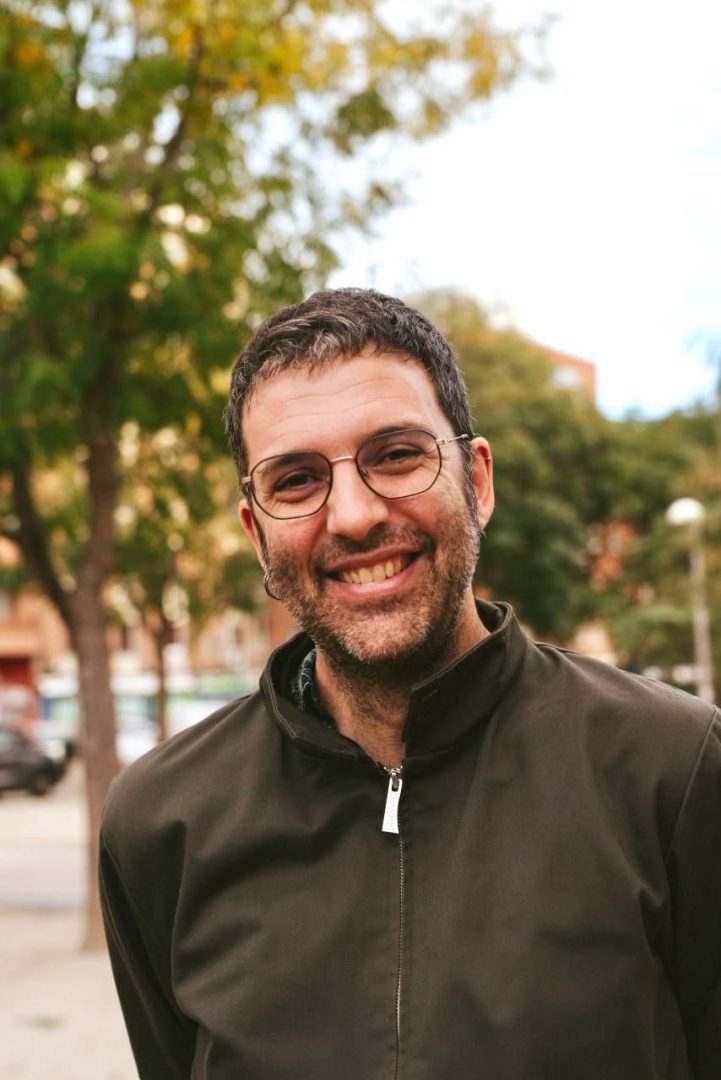
Ernest Marco Urrea

Info

  • Researcher ID: B-9299-2012
  • ORCID: 0000-0002-8033-6553
  • Email: ernest.marco(at)uab.es

Bio

Ernest Marco Urrea es Ingeniero Técnico Industrial (Universitat Politècnica de Catalunya, 1998) y licenciado en Ciencias Ambientales (Universitat Autònoma de Barcelona, 2001). Realizó su tesis doctoral en la UAB (2007) en el estudio de la aplicación de hongos basidiomicetos en la degradación de hidrocarburos alifáticos clorados. Durante su tesis fue visitante en el Department of Microbiology & Molecular Genetics (Michigan State University, USA) bajo la supervisión del Dr. C. A. Reddy. En 2009 obtuvo una ayuda postdoctoral Marie Curie y se incorporó al laboratorio del Dr. Lorenz Adrian en el Helmholtz Centre for Environmental Research (UFZ) en Leipzig (Alemania), donde se especializó en técnicas de isótopos estables aplicadas a la proteómica para estudiar el metabolismo bacteriano. Posteriormente, obtuvo una plaza de profesor lector (ayudante doctor) en el departamento de Ingeniería Química, Biológica y Ambiental (UAB) donde estableció un laboratorio de microbiología anaerobia. Actaulmente es professor agregat (profesor permanente laboral).

Su investigación se centra en los procesos de biodegradación de compuestos orgánicos peligrosos. Actualmente, el trabajo en su laboratorio está orientado al estudio de la fisiología y metabolismo de bacterias anaerobias dehalorespiradoras y degradadoras de BTEX con el objetivo de aplicar este conocimiento en proyectos de remediación de aguas subterráneas, en colaboración con administraciones e ingenierías ambientales.

Líneas de investigación actuales

  • Evaluación, diseño y monitorización de tratamientos in situ de remediación de acuíferos contaminados por hidrocarburos, incluyendo compuestos clorados y gasolinas.
  • Estudio de la fisiología y metabolismo de bacterias dehalorespiradoras y degradadoras de BTEX a partir de muestras enriquecidas en el campo.
  • Identificación de nuevas enzimas para la transformación de compuestos tóxicos en subproductos inocuos.
  • Aplicación de sistemas bioelectroquímicos para cultivar bacterias dehalorespiradoras.
  • Combinación de nanopartículas de Fe(O) y bacterias en el diseño de trenes de tratamiento.

Publications (since 2012)

  • Wang G, Fernández-Verdejo D, Marco-Urrea E, Guisasola A (*), Blánquez P (2026). Long-term anaerobic conversion of lindane by electrochemically generated hydrogen. J. Hazard. Mater. 512, 142242. DOI: https://doi.org/10.1016/j.jhazmat.2026.142242. .
  • Soder-Walz JM, Salom D, Granados-Rigol E, Fernández-Verdejo D, Vicent T, Marco-Urrea E (*), Blanquez P (2025). Enhanced aerobic bioremediation of an aquifer heavily contaminated with a mixture of chlorobenzenes and hexachlorocyclohexanes at the Sardas landfill (Spain). J. Hazard. Mater. 484, 136717 DOI: https://doi.org/10.1016/j.jhazmat.2024.136717. .
  • Blázquez-Pallí N (*), Torrentó C, Marco-Urrea E, Garriga D, González M, Bosc M (2024). Pilot tests for the optimization of the bioremediation strategy of a multi-layered aquifer at a multi-focus site impacted with chlorinated ethenes. Sci. Total Environ. 935, 173093. DOI: https://doi.org/10.1016/j.scitotenv.2024.173093. .
  • Pinel-Cabello M, Wasmund K, Soder-Walz JM, Vega M, Rosell M, Marco-Urrea E (2024). Divergent dual C-H isotopic fractionation pattern during anaerobic biodegradation of toluene within Aromatoleum species under nitrate-reducing conditions. Environ Pollut. 361, 124823. DOI: https://doi.org/10.1016/j.envpol.2024.124823. .
  • Soder-Walz JM, Deobald D, Vicent T, E. Marco-Urrea (*), Adrian L (2024). MecE, MecB, and MecC proteins orchestrate methyl group transfer during dichloromethane fermentation. Appl. Environ. Microbiol. 25:e0097824. doi: 10.1128/aem.00978-24 DOI: https://doi.org/10.1128/aem.00978-24. .
  • Trueba-Santiso A, Torrentó C, Soder-Walz J.M., Fernández-Verdejo D, Rosell M, Marco-Urrea E (*) (2024). Dual C–Cl isotope fractionation offers potential to assess biodegradation of 1,2-dichloropropane and 1,2,3-trichloropropane by Dehalogenimonas cultures. Chemosphere. 358, 142170. DOI: https://doi.org/10.1016/j.chemosphere.2024.142170. .
  • Palau J (*), Trueba-Santiso A, Yu R, Hatijah Mortan S, Shouakar-Stash O, Freedman DL, Wasmund K, Hunkeler D, Marco-Urrea E (*), Rosell M (2023). Dual C–Br isotope fractionation indicates distinct reductive dehalogenation mechanisms of 1,2-dibromoethane in Dehalococcoides- and Dehalogenimonas-containing cultures. Environ. Sci. Technol. 57, 1949-1958. DOI: http://10.1021/acs.est.2c07137. .
  • Salom D, Fernández‑Verdejo D, Moral‑Vico J, Font X, Marco‑Urrea E (*) (2023). Combining nanoscale zero‑valent iron and anaerobic dechlorinating bacteria to degrade chlorinated methanes and 1,2‑dichloroethane. Environ. Sci. Pollut. R. DOI: http://0.1007/s11356-023-25376-z. .
  • Soder-Walz JM, Wasmund K, Deobald D, Vicent T, Adrian L (*), Marco-Urrea E (2023). Respiratory protein interactions in Dehalobacter sp. strain 8M revealed through genomic and native proteomic analyses. Environ. Microbiol. 1-17 DOI: https://doi.org/10.1111/1462-2920.16464. .
  • Tucci, M, Fernández-Verdejo D, Resitano, M, Giacia P, Guisasola A, Blánquez P, Marco-Urrea E, Cruz Viggi C, Maturro B, Cognale S, Aulenta F (*) (2023). Toluene-driven anaerobic biodegradation of chloroform in a continuous-flow bioelectrochemical reactor. Chemosphere. 338, 139467. DOI: https://doi.org/10.1016/j.chemosphere.2023.139467. .
  • Wasmund E, Trueba-Santiso A, Vicent T, Adrian L, Vuilleumier S, Marco-Urrea E (*) (2023). Proteogenomics of the novel Dehalobacterium formicoaceticum strain EZ94 highlights a key role of methyltransferases during anaerobic dichloromethane degradation. Environ. Sci. Poll. Res. DOI: https://doi.org/10.1007/s11356-023-28144-1. .
  • Fernández-Verdejo D, Cortés P, Guisasola A, Blánquez P(*), Marco-Urrea E (2022). Bioelectrochemically-assisted degradation of chloroform by a co-culture of Dehalobacter and Dehalobacterium. Environ. Sci. Ecotechnol. 12, 100199. DOI: http://0.1016/j.ese.2022.100199. .
  • Soder-Walz JM, Torrentó C, Algora C, Wasmund K, Cortés P, Soler A, Vicent T, Rosell M (*), Marco-Urrea E (2022). Trichloromethane dechlorination by a novel Dehalobacter sp. strain 8M reveals a third contrasting C and Cl isotope fractionation pattern within this genus. Sci. Total Environ. 813, 152659. DOI: http://10.1016/j.scitotenv.2021.152659. Repository.
  • Trueba-Santiso A, Palau J, Soder-Walz JM, Vicent T, Marco-Urrea E (*) (2022). Assessment of aerobic biodegradation of lower-chlorinated benzenes in contaminated ground water using field-derived microcosms and compound-specific carbon isotope fractionation. J.Environ. Sci.118, 204–213. DOI: http://10.1016/j.jes.2021.12.025. Repository.
  • Fernández-Verdejo D, Cortés P, Blánquez P, Marco-Urrea E (*), Guisasola A (2021). Enhanced dechlorination of 1,2-dichloropropane to propene in a bioelectrochemical system mediated by Dehalogenimonas. J.Hazard Mater. 416, 126234. DOI: http://10.1016/j.jhazmat.2021.12623. .
  • Trueba-Santiso A, Wasmund K, Soder-Walz JM, Marco-Urrea E (*), Adrian L (2021). Genome sequence, proteome profile, and identification of a multiprotein reductive dehalogenase complex in Dehalogenimonas alkenigignens strain BRE15M. J. Proteome Res. 20, 613−623. DOI: http://10.1021/acs.jproteome.0c00569J. Repository.
  • Fernández-Verdejo D, Sulonen M, Pérez-Trujillo M, Marco-Urrea E, Guisasola A (*), Blánquez P (2020). Electrochemical dehalogenation of dibromomethane and 1,2-dibromoethane to non-toxic products using a carbonfiberbrush electrode. J Chem Technol Biotechnol. 96, 335–340. DOI: http://10.1002/jctb.6542. .
  • Trueba-Santiso A, Fernández-Verdejo D, Marco-Rius I, Soder-Walz JM, Casabella O, Vicent T, Marco-Urrea E (*) (2020). Interspecies interaction and effect of co-contaminants in an anaerobic dichloromethane-degrading culture. Chemosphere 240, 124877. DOI: http://0.1016/j.chemosphere.2019.124877. Repository.
  • Blázquez-Pallí N, Rosell M, Varias J, Bosch M, Soler A, Vicent T, Marco-Urrea E (*) (2019). Multi-method assessment of the intrinsic biodegradation potential of an aquifer contaminated with chlorinated ethenes at an industrial area in Barcelona (Spain). Environ. Pollut. 244, 165-173. DOI: http://10.1016/j.envpol.2018.10.013. .
  • Blázquez-Palli N, Rosell M, Varias J, Bosch M, Soler A, Vicent T, Marco-Urrea E (*) (2019). Integrative isotopic and molecular approach for the diagnosis and implementation of an efficient in-situ enhanced reductive dechlorination ethenes. Water Res. 267, 11106. DOI: http://10.1016/j.watres.2019.115106. Repository.
  • Blázquez-Pallí N, Shouakar-Stash O, Palau J, Trueba-Santiso A, Varias J, Bosch M, Soler A, Vicent T, Marco-Urrea E(*), Rosell M (2019). Use of dual element isotope analysis and microcosm studies to determine the origin and potential anaerobic biodegradation of dichloromethane in two multi-contaminated aquifers. Science of the Total Environment 696 , 134066. DOI: http://10.1016/j.scitotenv.2019.134066. .
  • Rosell M, Palau J (*), Mortan SH, Caminal G, Soler A,Shouakar-Stashe O, Marco-Urrea E (2019). Dual carbon – chlorine isotope fractionation during dichloro elimination of 1,1,2-trichloroethane by an enrichment culture containing Dehalogenimonas sp .Sci. Total Environ. 648, 422–429. DOI: http://0.1016/j.scitotenv.2018.08.071. Repository.
  • Malgorzata Nowak, K, Marco-Urrea, E, Adrian L (*) (2018). Markierung mikrobiellen Stoffwechsel. BIOspektrum. 24, 491-494. DOI: http://10.1007/s12268-018-0951-4. .
  • Aranda E (*), Godoy P, Reina R, Badia-Fabregat M, Rosell M, Marco-Urrea E, García-Romera I (2017). Isolation of Ascomycota fungi with capability to transform PAHs: Insights into the biodegradation mechanisms of Penicillium oxalicum. Intern. Biodet. Biodeg. 122, 141-150. DOI: http://10.1016/j.ibiod.2017.05.015. .
  • Mortan SH, Martín-González L, Vicent T, Caminal G, Nijenhuis I, Adrian L, Marco-Urrea E (*) (2017). Detoxification of 1,1,2-trichloroethane to ethene in a bioreactor co-culture of Dehalogenimonas and Dehalococcoides mccartyi strains. J. Hazard. Mater. 331, 218–225. DOI: http://10.1016/j.jhazmat.2017.02.043. .
  • Palau J (*), Shouakar-Stash O, Hatijah Mortan S, Yu R, Rosell M, Marco-Urrea E, Freedman DL, Aravena R, Soler A, Hunkeler D (2017). Hydrogen isotope fractionation during the biodegradation of 1,2-dichloroethane: potential for pathway identification using a multi-element (C, Cl, H) isotope approach. Environ. Sci. technol. 51, 10526-10535. DOI: http://10.1021/acs.est.7b02906. .
  • Palau J (*), Yu R, Hatijah Mortan S, Shouakar-Stash O, Rosell M, Freedman DL, Sbarbati C, Fiorenza S, Aravena R, Marco-Urrea E, Elsner M, Hunkeler D (2017). Distinct dual C–Cl isotope fractionation patterns during anaerobic biodegradation of 1,2-dichloroethane: potential to characterize microbial degradation in the field. Environ. Sci. Technol. 51, 2685-2694. DOI: http://10.1021/acs.est.6b04998. .
  • Trueba-Santiso A, Parladé E, Rosell M, Lliros M, Mortan SH, Martínez-Alonso M, Gaju N, Martín-González L, Vicent T, Marco-Urrea E (*) (2017). Molecular and carbon isotopic characterization of an anaerobic stableenrichment culture containing Dehalobacterium sp. during dichloromethane fermentation. Sci.Total Environ. 581–582, 640–648. DOI: http://10.1016/j.scitotenv.2016.12.174. .
  • Adrian L (*), Marco-Urrea E (2016). Isotopes in geobiochemistry: tracing metabolic pathways in microorganisms of environmental relevance with stable isotopes. Curr. Opin. Biotechnol. 41, 19-25. DOI: http://10.1016/j.copbio.2016.03.018. .
  • Ferrando-Climent L, Cruz-Morató C, Marco-Urrea E, Vicent T, Sarrà M, Rodriguez-Mozaz S (*), Barceló D (2015). Non conventional biological treatment based on Trametes versicolor for the elimination of recalcitrant anticancer drugs in hospital wastewater. Chemosphere 136, 9–19. DOI: http://10.1016/j.chemosphere.2015.03.051. .
  • Marco-Urrea E, García-Romera I, Aranda E (*) (2015). Potential of non-ligninolytic fungi in bioremediation of chlorinated and polycyclic aromatic hydrocarbons. New Biotechnol. 32, 620-628. DOI: http://10.1016/j.nbt.2015.01.005. .
  • Martín-González L, Mortan SH, Rosell M, Parladé E, Martínez-Alonso M,Gaju N, Caminal G, Adrian L, Marco-Urrea E(*) (2015). Stable carbon isotope fractionation during 1,2-dichloropropane-to-propene transformation by an enrichment culture containing Dehalogenimonas strains and a dcpA gene. Environ. Sci. Technol. 49, 8666−8674. DOI: http://10.1021/acs.est.5b00929. .
  • Aranda E (*), Gody P, Reina R, Badia-Fabregat M, Rosell M, Wittich RM, Marco-Urrea E, García-Romera I (2014). Isolation of PAH dwelling Penicillium for application in bioremediation processes. New Biotechnol. 31, S14. DOI: http://10.1016/j.nbt.2014.05.1759. .
  • Badia-Fabregat M, Rosell M, Caminal G, Vicent T, Marco-Urrea E (*) (2014). Use of stable isotope probing to assess the fate of emerging contaminants degraded by white-rot fungus. Chemosphere 103, 336–342. DOI: http://10.1016/j.chemosphere.2013.12.029. .
  • Cruz-Morató C, Lucas D, Llorca M, Rodriguez-Mozaz S, Gorga M, Petrovic M, Barceló D, Vicent T, Sarrà M, Marco-Urrea E (*) (2014). Hospital wastewater treatment by fungal bioreactor: removal efficiency for pharmaceuticals and endocrine disruptors compounds. Sci Total Environ. 493, 365-376. DOI: http://10.1016/j.scitotenv.2014.05.117. .
  • Gros M, Cruz-Morato C, Marco-Urrea E, Longrée Ph, Singer H, Sarrà M, Hollender J, Vicent T, Rodriguez-Mozaz S (*), Barceló D (2014). Biodegradation of the X-ray contrast agentiopromide and the fluoroquinolone antibiotic ofloxacin by the white rot fungusTrametes versicolor in hospital wastewaters and identification of degradation products. Water Res. 60, 228-241. DOI: http://10.1016/j.watres.2014.04.042. .
  • Cruz-Morató C, Ferrando Climent L, Rodriguez-Mozaz S, Barceló D, Marco-Urrea E, Vicent T, Sarrà M (*) (2013). Degradation of pharmaceuticals in non-sterile urban wastewater by Trametes versicolor in a fluidized bioreactor. Wat Res 47, 3200-5210. DOI: http://10.1016/j.watres.2013.06.007. .
  • Cruz-Morató C, Jelíc A, Perez S, Petrovic M, Barceló D, Marco-Urrea E, Sarrà M (*), Vicent T (2013). Continuous treatment of clofibric acid by Trametes versicolor in a fluidized bed bioreactor: Identification of transformation products and toxicity assessment. Biochem. Eng. J. 75, 79–85. DOI: http://10.1016/j.bej.2013.03.020. .
  • Marco E, Font X, Sánchez A (*), Gea T, Gabarrell X, Caminal G (2013). Co-composting as a management strategy to reuse the white-rot fungus Trametes versicolor after its use in a biotechnological process. Int. J.Environ.Waste Manage. 11,1, 100-108. DOI: http://10.1504/IJEWM.2013.050637. .
  • Schipp CJ, Marco-Urrea E, Kublik A, Seifert J, Adrian L (*) (2013). Organic cofactors in the metabolism of Dehalococcoides mccartyi strain. Phil. Trans. R. Soc. B36820120321. DOI: http://10.1098/rstb.2012.0321. .
  • Jelic A, Cruz-Morato C, Marco-Urrea E, Sarrà M, Perez S (*), Vicent T, Petrovic M, Barceló (2012). Degradation of carbamazepine by Trametes versicolor in an air pulsed fluidized bed bioreactor and identification of intermediates. Water Res. 46, 955-964. DOI: http://10.1016/j.watres.2011.11.063. .
  • Marco-Urrea E, Reddy CA (*) (2012). Degradation of Chloro-organic Pollutants by White Rot Fungi. In: Singh, S. (eds) Microbial Degradation of Xenobiotics. Environmental Science and Engineering. Springer, Berlin, Heidelberg. DOI: http://10.1007/978-3-642-23789-8_2. .
  • Marco-Urrea E, Seifert J, von Bergen M, Adrian L (*) (2012). Stable isotope peptide mass spectrometry to decipher amino acid metabolism in Dehalococcoides strain CBDB1. J. Bacteriol. 194, 4169-4177. DOI: http://10.1128/JB.00049-12. .

Bioremuab

  • Sobre
  • Servicios
  • Investigación
  • Proyectos y contratos
  • Noticias

Contacto

Edificio Q. Campus de la UAB
08193 Bellaterra (Cerdanyola del Vallès)
España

info@bioremuab.com


  • Política de privacidad

© 2024 Bioremuab.