There is a wide variety of waste and wastewater with a high biodegradable organic content that can be used to obtain energy (biogas) or as fertilizer.
Anaerobic digestion (AD) is the most widely used technology in industry for the treatment of this type of biodegradable waste and wastewater due to its numerous advantages: it minimizes greenhouse gas emissions; it generates biogas that can be used to generate energy and thus avoid other more polluting energy sources; and it reduces the organic matter content by a high percentage.
Our research group has extensive knowledge of the AD process and can help companies to answer the following questions that may arise:
Before building/designing treatment plants:
- What is the percentage of biodegradability of the waste/wastewater? What is the percentage of biogas production?
- In industrial wastewaters with potentially toxic constituents: What is the threshold concentration of the constituent inhibiting the AD process?
- Is co-digestion of waste necessary to complement each other and to obtain better biogas yields?
In the start-up of treatment plants:
- What is the best inoculum?
- What is the strategy to follow in increasing the organic load to the design load?
In the detection of problems during the lifetime of the plants:
- Is there a loss of activity of the methanogenic micro-organisms in the reactor? is re-inoculation necessary?
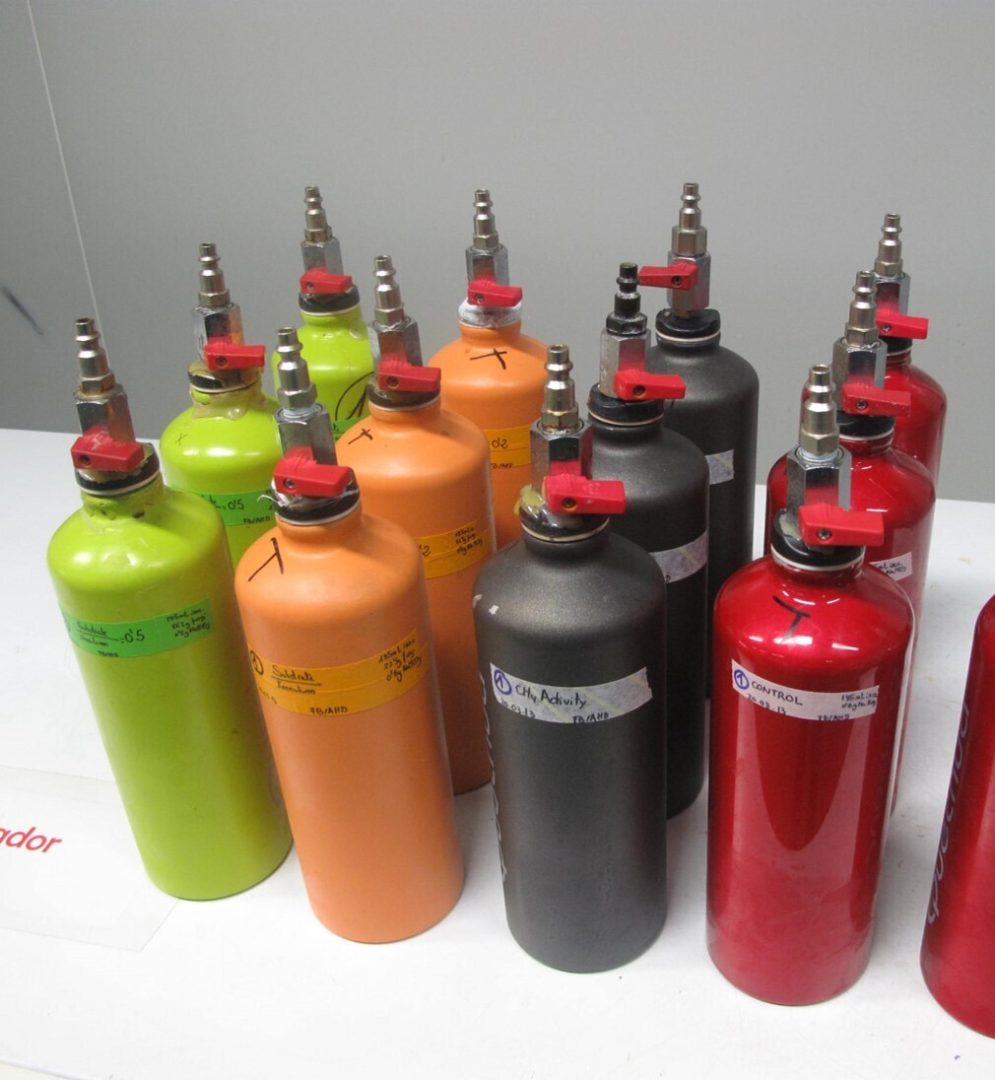
The following tests are available to answer these questions:
- Anaerobic Biodegradability
- Methanogenic Activity
- Anaerobic Toxicity
These tests are carried out in batch, at mesophilic or thermophilic temperature, and allow us to quantify the rate of biogas production, the maximum biogas production, the residual COD at the end of the test, the Volatile Fatty Acid (VFA) content, the composition of the biogas and other characteristics of the digestate (pH, COD, TS/VS, TSS/VSS, nutrients, etc.).
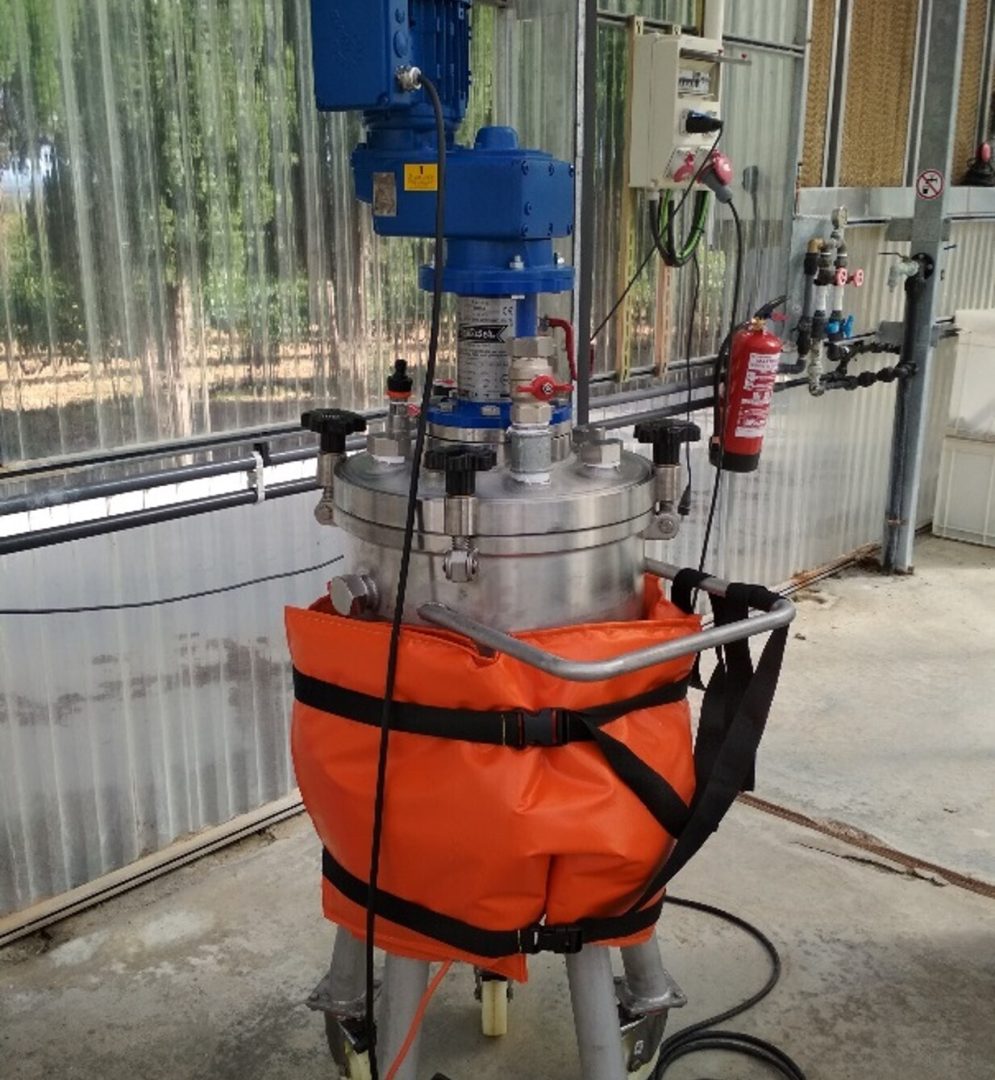
We also have anaerobic reactors of up to 5L that allow us to determine the maximum organic load of a waste/wastewater in a continuous treatment, and the biogas production.
Some studies on the evaluation of the methanogenic potential of organic wastes conducted by BioremUAB have been published in scientific journals::
- Avila R, Justo A, Carrero E, Crivillés E, Vicent T, Blánquez P (*) (2022). Water resource recovery coupling microalgae wastewater treatment and sludge co-digestion for bio-wastes valorisation at industrial pilot-scale. Bioresour. Technol. 343, 26080.
- Avila R, Carrero E, Vicent T, Blánquez P (*) (2021). Integration of enzymatic pretreatment and sludge co-digestion in biogasproduction from microalgae. Waste Manage. 124, 254-263.
- Avila R, Carrero E, Crivillés E, Mercader M, Vicent T, Blánquez P(*) (2020). Effects of low temperature thermal pretreatments in solubility and co-digestion of waste activated sludge and microalgae mixtures. Algal Res. 50,101965.
- Abad V, Avila R, Vicent T, Xavier Font(*) (2019). Promoting circular economy in the surroundings of an organic fraction of municipal solid waste anaerobic digestion treatment plant: Biogas production impact and economic factors. Bioresour. Technol. 283, 10-17.
Some companies and public administrations we have worked with in the last years include Miguel Torres SA, Consorci per a la Gestió de Residus del Vallès Oriental, FACSA (Grupo Gimeno), among others.
Contact: Paqui.blanquez@uab.cat